 Skip to Navigation
Skip to Content
Skip to Navigation
Skip to Content
After Dark: Night, Sky, and Shadow
Juror's Statement
In the 40 years that I have been practicing and studying the history of night photography, the genre has emerged from a quirky obscurity to a trendy ubiquity. Throughout the history of photography, photographing in the dark has been much more difficult than daytime photography due to the technical challenges and limitations of the equipment and materials at hand. Early attempts at night photography were limited by the sensitivity (or lack thereof) of 19th century emulsions, and the untested and experimental nature of exposure and development techniques, among many other technical challenges, some of which photographers still face today. Even in this age of incredible digital technology, night photographers still struggle with something as seemingly simple as focusing in the dark.
The fundamentals of correct exposure, compensation for reciprocity failure, managing contrast, halation and lens flare have been replaced by the Herculean efforts of photographers who challenge themselves to make tracked, multi-row double arch Milky Way panoramas by starlight with astro-modified cameras. Those extraordinary images require a high level of skill, dedication, and resources to make. And yet, these immensely technical accomplishments are often reduced to bucket-list-must-have shots.
The most compelling night photographs are those that convey a sense of mystery, the unknown, or unknowable, and evoke a strong emotional response.
The photographer Tim Baskerville, founder of the Bay Area night photography collaborative The Nocturnes and the first night photography online gallery eloquently described the essence of night photography back in 1992.
"Surrealism,
the mystery of place,
solitude,
and a heightened sense
of the nature of things - night photography seems a worthy vehicle, a ritual to express these themes.”
I’ve carried these insightful words with me ever since, and had them in mind during the curation of this exhibit at the Photo Place gallery. In reviewing the many excellent submissions, I made an initial pass through the images for those that had an immediate emotional impact, and then a second pass for technical competence. At this point, groups of images emerged that were obviously the work of single individuals––those that had a developed style, technical proficiency, and a certain undefinable quality that made them stand out from the majority of submissions. My impulse was to create an exhibit of groups of 6-8 images from a dozen or so photographers, but this was not the mandate, or nature of this competition.
I’ve chosen a powerful group of images that I feel represent the diversity of how night photography has evolved while still maintaining that “heightened sense of the nature of things” that Tim wrote about 34 years ago. I’d like to thank Zach Hoffman and the gallery for inviting me to jury this exhibit, and especially the many artists who ventured into the darkness to create the many images that made it both a challenge and a delight to condense them into a show that highlights the unique nature of night photography that has been dear to me for so long.
- Lance Keimig
About the Juror
Lance Keimig is a Hinesburg, Vermont based photographer who has been photographing primarily at night for over 40 years. He’s a partner in National Parks at Night, where he teaches workshops and leads photo tours around the world. Keimig is also a co-owner of the Nightscaper Conference and a co-founder and co-owner of the Night Photo Summit, annual events that bring the worldwide night community together. He has taught night photography for over 25 years, and published 2 books on the subject, including Night Photography and Light Painting: finding Your Way in the Dark, which has been translated into 6 languages.
Keimig is the curator of Darkness, Darkness, a traveling exhibit of Night Photography, which opened at the Three Columns Gallery at Harvard University, where he was curator from 2006-2010. His photographs are held in private, public, and corporate collections including The Grace Museum in Abilene, TX, The Art Complex Museum In Duxbury, MA, The Boston Athenaeum, The Boston Public Library, State Street Bank, Fidelity Investments, Paramount Partners, Hitachi, Rayovac, and 3 Com.
Call for Entries
What happens when the light fades?
PhotoPlace Gallery invites submissions for After Dark, a juried exhibition celebrating photography made in the hours between dusk and dawn.
We welcome a wide range of work, including night and astro-landscapes, urban and street photography, architecture, long exposures, light painting or drawing, and experimental approaches. From the glow of city lights to the quiet of rural darkness, from dramatic shadow to expansive night skies, this exhibition seeks images that explore how light, darkness, and the manipulation of time shape what we see and feel.
All photographic styles and processes are encouraged. We are looking for compelling, creative work that captures the unique atmosphere of the night.
We are honored to have Lance Keimig as juror for After Dark: Night, Sky, and Shadows. He will select up to 35 images for exhibition in our Middlebury, Vermont gallery and another 40 images for our Online Gallery. All 75 images will be reproduced in the exhibition catalog and remain permanently on our website, and are promoted on social media with links to photographers' URLs.
If you are interested in learning more about photographing at night please visit these organizations:
Night Photography and Light Painting: finding Your Way in the Dark
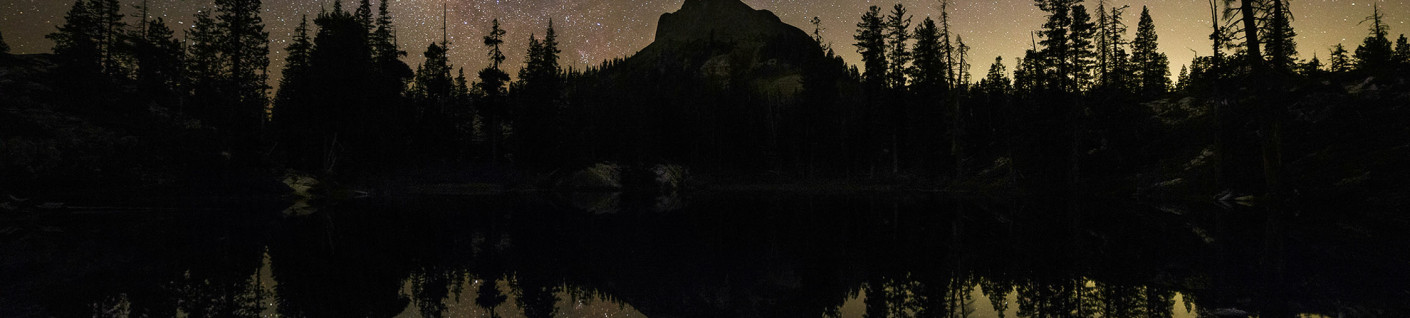
Banner Image: James Novaes